
Why Stocks Drop 20% Next
What's The Next Catalyst?


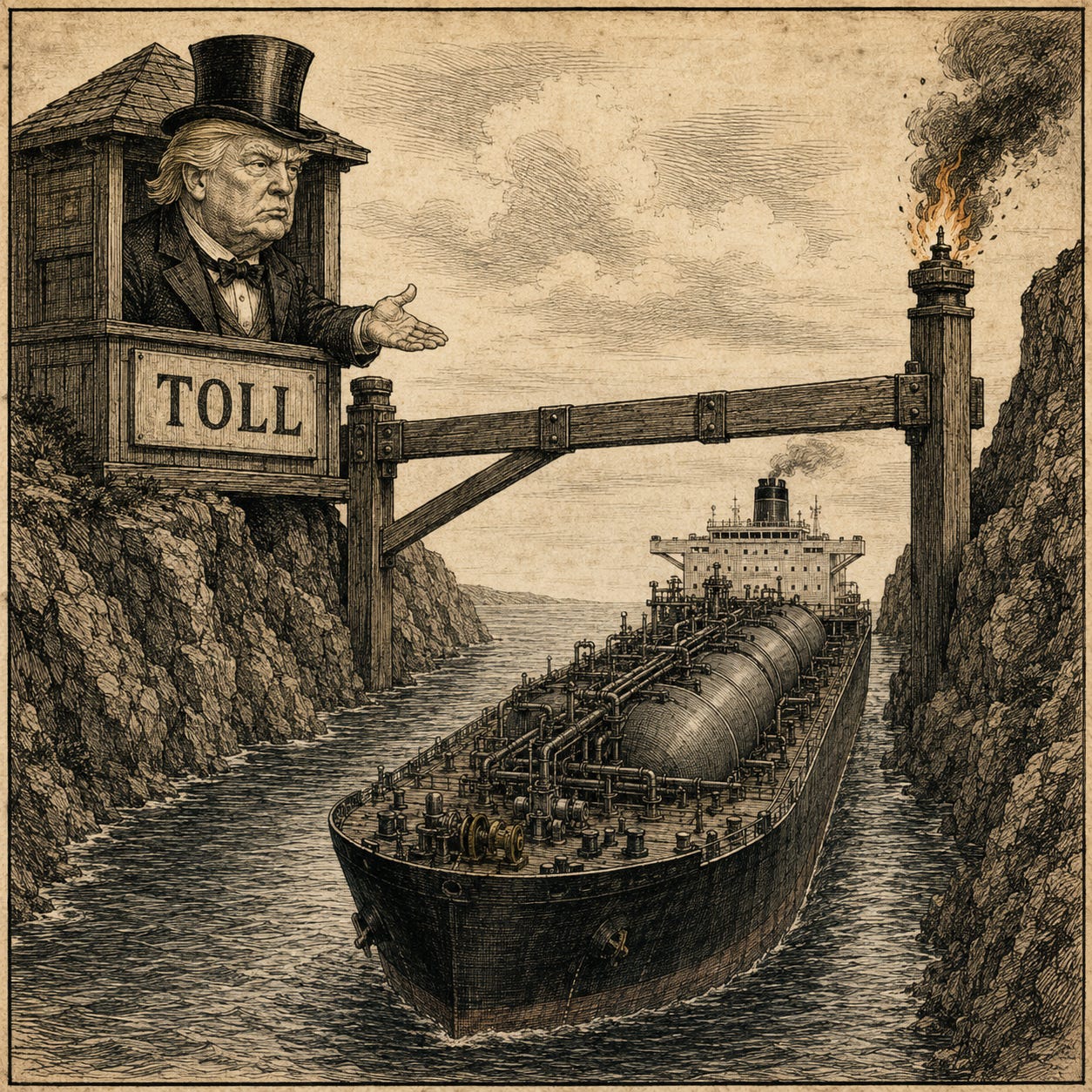
TABLE OF CONTENTS
Stock Idea: STLLR GOLD
(Sponsored Post)
Geopolitics and Commodities Analysis
Global Monetary Reset Begins; Bonds Next To Implode
Biggest Crash Since 1929: 90% Collapse Starting, Warns Harry Dent
Credit Collapse Warning: Rick Rule Reveals ‘The One Thing That Really Scares Me’
What Would End Bull Market Overnight? Strategist Reveals Trigger
Why Are Stocks Tanking? Fund Manager Explains Tech Rotation
Is Market On Verge Of Collapse? Strategist Reveals Real Drivers And Riskiest Sector
Market Recap
MARKET RECAP: July 6, 2026 - July 13, 2026
Oil ended one week and opened the next as the market’s governing story. President Donald Trump said on Monday that the United States would reimpose a naval blockade on Iranian shipping and collect a 20% toll on all cargo transiting the Strait of Hormuz. West Texas Intermediate settled 9.4% higher at $78.14 per barrel, and Brent rose 9.6% to $83.30 per barrel, the highest close since June 15 and Brent’s largest one-day gain since May 2020.
The announcement followed a weekend of exchanged strikes. U.S. Central Command bombed targets across Iran, and Tehran retaliated against American facilities in Jordan, Kuwait, Bahrain, and Oman. Vessel transits through the strait fell 52% week over week, according to Kpler.
Equities gave way. The S&P 500 lost 0.79% to 7,515.34, the Nasdaq Composite dropped 1.55% to 25,873.18, and the Dow Jones Industrial Average slipped 0.26% to 52,498.64.
The week had opened very differently. The Dow closed above 53,000 for the first time on July 6, finishing at a record 53,055.91, then shed 576.76 points on July 8 as crude spiked. It ended the week down 0.5%, while the Nasdaq gained 1.74% and the S&P 500 rose 1.23%.
Energy costs revived the rate-hike trade. Minutes from the June 16 to 17 meeting, released July 8, showed a divided committee, with a few officials arguing that a case existed for tightening. Fed Governor Christopher Waller said on Monday that policy sat at a crossroads and that another hot core reading would force the FOMC to consider raising rates in the near term.
Markets repriced fast. Futures assigned a 46.5% chance of an increase at the July 29 meeting and close to 70% by September. The 2-year Treasury yield reached 4.25%, its highest since February 2025; the 10-year climbed toward 4.60%; and the dollar index pushed above 101.
Semiconductors drove the equity story in both directions. SK Hynix raised $26.5 billion in its Nasdaq debut on Friday, the largest U.S. listing ever by a foreign company, pricing at $149 and opening at $170. Its Seoul shares then fell more than 15% on Monday, dragging South Korea’s Kospi down 9.2% and pulling chipmakers lower worldwide.
Hard assets and crypto sold off alongside stocks. Gold fell more than 2% to roughly $4,020 per oz, and silver slid below $59 per oz, both pressured by the tightening outlook. Bitcoin surrendered $62,000 to trade near $61,900, and investors now await Tuesday’s June CPI report, Chair Kevin Warsh’s first congressional testimony, and second-quarter results from the large banks.
Market Movements
The following assets experienced dramatic swings in price this past week. Data are up-to-date as of July 13 at approximately 4pm EST.
(Data from StockAnalysis.com)
UP
Alibaba - up 16.95%
META - up 12.47%
BP - up 9.17%
DOWN
Intel - down 15.65%
SpaceX - down 14.07%
AstraZeneca - down 12.95%
DXY - down .39%
Bitcoin - down 3.16%
Gold - down 3.07%
Silver - down 7.61%
Platinum - down 1.17%
10-year Treasury Yield - up 14 basis points
(10-year data from https://www.cnbc.com)
S&P 500 - down .44%
Russell 2000 - down .32%
Market Analysis
David Woo returned to the show on July 3 with a single thesis. He argued the AI trade would break in the second half of 2026, and he predicted the Nasdaq would fall 20% on any hint that the capex cycle has ended.
He named the test. Second-quarter earnings from Microsoft, Amazon, Alphabet and Meta land in the final week of July, and Woo said soft capex guidance from any of them would start the unwind.
Woo dismissed the June payroll miss. Hiring rose 57,000 against a 115,000 consensus, but he argued the economy remained strong, supported by full expensing provisions and pent-up investment demand. The bond market rallied only modestly, which he read as confirmation.
Gold’s obstacle was real yields, he explained. They sat near five-year highs and repriced upward through the year, which he called the central problem for bullion. He predicted gold would rally only after the AI bubble bursts, echoing the pattern that followed the dot-com peak.
He read Meta’s move into cloud computing as an admission. Woo argued that the company overbuilt AI infrastructure, found its Llama models uncompetitive, and now seeks to rent out excess capacity. The Kospi fell roughly 8% on the news, and the selling spread to Japanese chip names.
Woo separated training silicon from inference silicon. Training chips remain difficult to design, but inference chips do not, and he argued that margin compression has already hit Broadcom and AMD. The high-bandwidth memory rally in Micron, Samsung, and SK Hynix rested on a shortage that new capacity would close by year’s end.
Monetization was his deeper worry. Woo argued that roughly 80% of AI revenue flows to Anthropic and OpenAI, and that these two firms ultimately fund the entire chain running through hyperscalers such as Nvidia and TSMC. He said Anthropic’s Mythos model re-energized the trade in April, but its restricted release left the revenue question unanswered.
Geopolitics pointed the other way. Woo said the Israel-Lebanon agreement signed in Washington, brokered by Marco Rubio, signaled a hawkish shift that would complicate the Iran MOU, and he predicted oil would head higher within a week. He saw little upside in Bitcoin, arguing the administration favors stablecoins because they are dollar-pegged and buy Treasuries—his positions: long oil, short Nasdaq 100.
Stock Idea: STLLR GOLD
(Sponsored Post)
STLLR Gold owns three significant Canadian assets with multi-billion-dollar upside: Tower, Colomac, and Hollinger Tailings. Tower and Colomac are among the largest undeveloped gold projects in the country, while Hollinger is a clean-up site with potential for near-term cash flow.
Check out David’s interview with STLLR President and CEO Keyvan Salehi in the video above.
Across these projects, STLLR has delineated 16.6 million ounces in estimated mineral resources, representing over $2 billion in replacement cost. Tower alone could deliver $2.5 billion in after-tax NPV if gold reaches $3,200, and Colomac spans 1,000 square kilometers of greenstone with considerable district-scale potential.
Backed by a seasoned management team and strong leverage to rising gold prices, STLLR Gold is positioned to unlock long-term value. Learn more at stllrgold.com/davidlin. Please review their cautionary statements and risk disclosures on their website and on www.sedarplus.ca .
Economic Analysis
Eric Basmajian, an economist and founder of EPB Research, argued that the stock market was not the leading indicator many investors assumed it was.
Stocks anticipated business cycle bottoms well, he explained, but tended to be coincident with, or slightly lag, peaks. The S&P 500 bottomed in March 2009, three months before the recession ended, yet peaked just two months before the 2007 downturn began.
The real leading indicator, he argued, was the cyclical economy, meaning construction and manufacturing.
Tighter Fed policy hit those rate-sensitive sectors first, which dragged down earnings, then equities, then the broader economy.
Basmajian described oil as an amplifier rather than a driver, dangerous only when the labor market was already weakening.
Basmajian said housing was the economy’s last weak sector. Home construction had fallen 20% to 30%, yet builder employment barely dipped because profit margins absorbed the blow, sliding from 20% in 2022 to 11% now.
Further margin compression from elevated mortgage rates near 6.5% could trigger the layoff cycle that historically starts recessions.
Manufacturing, by contrast, looked to be bottoming out as the AI buildout drove explosive growth in computer equipment production. He flagged a deeper structural problem in national accounts.
Net national savings had collapsed from about 11.5% of GDP in the 1960s to 0.7% today, leaving the US reliant on foreign capital to fund investment.
Basmajian tied widening inequality to rising corporate profit margins, which have increased from roughly 8% to 20% since 1990, linking this shift to industry concentration and internet network effects rather than globalization.
He argued that the Fed had little incentive to pop asset bubbles and criticized its continued mortgage-bond buying. Stocks would keep rising while margins climbed, he predicted, though the cyclical economy remained the key risk for recession.
Geopolitics and Commodities Analysis
The strait is still closed. Dr. Nomi Prins, best-selling author and geo-economist, said the market has stopped treating that as an emergency and started treating it as a line item, a toll that tankers now build into the cost of moving a barrel.
Oil reached 138 during the war. It has since settled into the 70s. Prins argued the spike was less a supply story than a fear story, and she predicted crude would remain roughly range-bound between 70 and 80 while strategic reserves refill.
That descent matters more than the Fed does, in her reading. Lower energy prices feed through to CPI and PPI regardless of what the core measure strips out. Odds of a hike by year-end, she noted, fell from about 70% to 30%.
Her policy advice was to sit still. Prins argued that a 25- or 50-basis-point move does not move inflation, and that supply chains do. She read Kevin Warsh’s brief public statement as an assertion of independence rather than a hawkish turn, and she pointed out that the Fed’s balance sheet has been growing by 40 to 50 billion a month since December.
Then the deeper current. The 30-year Treasury touched 5%, and Prins tied the move to issuance and demand as much as to inflation. Central banks are not returning to the bond, she argued, and gold has overtaken Treasuries as their primary reserve asset.
China’s Treasury holdings tell the story. Prins put them near $1.3 trillion in the mid-2010s and around $620 billion now. Gold sits at only 5% to 6% of Chinese reserves, so the room to run is considerable.
She rejected the gold standard framing anyway. What is emerging, she explained, is not convertibility at the teller window but rather a system in which gold quietly collateralizes more of the plumbing beneath it.
On the trade, she liked what the paper market broke. Silver ETF volumes ran near 50 million oz per day against a 25 million average, while annual mine supply sits around 820 million oz, a gap she called a distortion worth exploiting. She favored junior copper developers and rare-earth names, and she called the era “geopolitical commodity warfare.”
Global Monetary Reset Begins; Bonds Next To Implode
Gold investors have spent three months waiting for a payoff that never arrived. Matthew Piepenburg, Partner of Von Greyerz AG, met that complaint directly. He argued the January peak was euphoric, that the current price sits only modestly below its all-time high close, and that the metal has never moved in a straight line.
He reached for the 1970s to make the point. Gold ran from 35 to 850 across that decade, but the climb included five corrections of 20% or more, and the price halved between 1974 and 1976. What followed was an eightfold advance.
The war explained the rest. Forced selling came from levered ETFs, from algorithmic funds trading momentum rather than preservation, and from sovereigns. Turkey, he explained, imports more than 90% of its oil and gas and needed dollars, so it sold its most liquid asset.
But price action was the misdirection. The real story, Piepenburg argued, sits in the bond market, a 145 trillion arena that dwarfs equities and underpins everything else.
Trust is what has broken there. He said US public debt now stands near 40 trillion, that global debt runs to 360 trillion, and that yields are at decade highs across the US, Japan, Germany, and the UK, signaling falling demand rather than a healthy economy.
So the collateral is changing. Central banks now hold more gold than Treasuries, a reversal he called unthinkable five years ago. He said buying has run at five times its prior pace since 2022, with ten of the last eleven quarters above 200 tons, and he pointed to Chinese purchases of 160 tons in May.
Piepenburg also flagged a structural move that few noticed. ICBC halted paper gold trading, and Shanghai is building settlement rails through Hong Kong. He predicted a physical-based exchange that prices gold on supply and demand rather than leveraged paper claims.
On rates, he inverted the standard objection. Rising yields look like a headwind for a non-yielding asset only if one accepts the official inflation print. Piepenburg argued that real inflation is near 10%, leaving Treasury buyers with deeply negative real yields.
His endgame is stagflation and debasement. He said stablecoins now function as synthetic demand for Treasuries, and he predicted hard assets, farmland, multifamily property, and pricing-power equities will carry the inflationary decade.
Biggest Crash Since 1929: 90% Collapse Starting, Warns Harry Dent
Harry Dent, Founder of HS Dent, returned to the show with the same warning he has carried for years. He argued that the current market is the largest bubble in history, and he predicted the first leg of its collapse would arrive by the end of 2026.
The numbers he gave were specific. Dent predicted an initial crash of up to 50% in the S&P 500 within three months, and up to 60% in the Nasdaq. A relief bounce would follow, and then a decline of 80% to 90% over the next few years.
His timing rests on cycles. Dent said the four-year stock cycle points down into the autumn, and he identified July through October as the window in which bubbles have historically broken. He argued that a minor slowdown is all it takes to trigger the unwind.
The cause, in his telling, is artificial. Dent said governments poured roughly $31 trillion of deficit spending and money printing into an economy averaging $20 trillion since 2008. Growth stayed at 2% to 3% anyway, which he read as evidence that the expansion was purchased rather than earned.
Demographics form the second pillar. Dent works from a 46-year lag on the birth index, adjusted for immigration, and he argues the entire developed world has now passed its spending peak. Japan and South Korea led, and the rest will follow.
He was blunt about gold. Dent argued that gold and silver have joined the bubble rather than hedged it, and he predicted a 60% to 70% decline, with a possible low near $1,074. He said Treasuries, not metals, would be the haven, and he predicted yields would fall toward zero as deflation replaces inflation.
Housing drew his darkest forecast. Dent predicted declines of 50% to 70%, and he argued this matters more than equities because most households hold their wealth in property. He said baby boomer selling will outpace millennial buying, a first in recorded history.
On Bitcoin, he split the timeframe. Dent predicted a drop to 30,000 or lower by year-end, then a long climb toward $600,000 to $1 million within 10 to 15 years. He argued Bitcoin will eventually anchor a digital financial system in the way gold once anchored a physical one.
Credit Collapse Warning: Rick Rule Reveals 'The One Thing That Really Scares Me'
Rick Rule, proprietor of Rule Investment Media and co-founder of Battle Bank, spoke from the floor of his own symposium in Boca Raton, where 68 exhibitors were accepted, and 135 were turned away. He said he owns every company on the floor, and he argued that the vetting is what separates the event from its competitors.
Sentiment in mining had collapsed even though gold sat near the same price as last autumn. Rule explained the gap. Investors are emotional rather than rational, and feeling is easier than thinking.
That collapse created his opportunity. The junior resource market sold off roughly 40%, and he said the good companies fell alongside the bad in equal measure. He argued that spectacular value now exists precisely because sentiment is poor.
His second-half outlook was soft. Rule predicted less pressure on the Fed to cut in 2026, which implies a firm dollar and a subdued gold price. He argued the Gulf conflict functioned as a tax, draining liquidity through high oil prices, and he predicted the economy would surprise people with its weakness.
One risk dominated the conversation. Rule said high-yield and subprime credit ETFs hold trillions of dollars and that many holders do not understand the credit risk. The ETF wrapper is liquid, but the underlying bonds are not, and some trade only once every six weeks.
He described the mechanism as a bank run without a backstop. Forced selling to fund redemptions would price distressed paper at distressed levels, and he argued the contagion could reach the broader market.
The Fed’s capacity has narrowed since 2008. Federal debt then stood near 40% of GDP, Rule said, and now runs around 120%. A bailout would require printing, and printing would be wildly inflationary rather than merely inflationary.
His allocations followed from the analysis. Rule said gold equities look fairly priced, a condition he has seen only a handful of times in his career, and he predicted the nominal gold price will be markedly higher in 10 years. Oil and gas stocks, in freefall, drew the largest share of his intended capital. He argued royalty and streaming companies benefit perversely from high rates, citing the $4.2 billion BHP-Wheaton transaction.
What Would End Bull Market Overnight? Strategist Reveals Trigger
Sam Burns, chief strategist of Mill Street Research, argued that AI-related companies drove nearly all of the S&P 500’s gains this year. Strip out that sector, he said, and the index was roughly flat.
Leadership had rotated away from the Magnificent 7 toward hardware and memory makers, whose earnings surged. Burns explained that the real risk was not valuation but expectations.
If AI earnings estimates slow and heavy leverage is in the system, a sharp unwind could follow. He named a slowdown in tech and AI capital spending as the trigger that would end the bull market, not the Fed.
Burns said the Fed had stayed on the sidelines and would likely remain there.
Inflation ran at 4.2% in May, and he expected the June print to cool as oil prices eased. He argued that inflation alone did not hurt stocks, because companies passed along higher prices; the danger came only if the Fed raised rates aggressively, which he did not expect.
At most, he saw one or two quarter-point hikes over the next 6 to 12 months, too small to move markets or rate-insensitive AI spending.
Burns predicted oil would hold near $70/barrel absent a major shock, and he doubted a return to $110/barrel. He put the odds of a recession at low and said the labor market was holding up, with weakness mainly among younger workers.
Gold looked unlikely to benefit while real rates stayed high, and he saw Bitcoin pressured by supply and waning speculative interest.
Why Are Stocks Tanking? Fund Manager Explains Tech Rotation
Sam Rahman discussed how technology stocks are leading to a broad sell-off.
Rahman explained the decline as a positioning unwind rather than a verdict on artificial intelligence. Investors had crowded into semiconductor and memory names tied to the data center buildout. Money moved into healthcare, consumer staples, and financials.
He argued the Magnificent Seven had become the laggards of the tech trade. Most were down year-to-date, while Micron, SanDisk, and Applied Materials drove much of the index’s gain. The market sold the spenders and bought the beneficiaries of the capex boom.
Korean chip shares also dropped sharply after Meta signaled a move into cloud computing. Rahman said the Meta headline was an excuse rather than a cause. He described Meta as a company in search of a strategy, and he argued AI agents pose a real risk to the engagement that funds its advertising business.
Rahman applied a three-part test to large technology firms: control of compute, control of the app layer, and control of distribution. Meta owns the apps but not the underlying platforms or the devices. Alphabet looked stronger to him after the DOJ ruling last August, which cleared the way for Gemini, and he said YouTube remains difficult to disrupt because its content is human-made.
On Apple, he argued that the iOS ecosystem, not the handset, is the asset. Services carry higher margins and grow faster than hardware. He predicted an AI-driven upgrade cycle and, later, a serious Apple entry into home robotics.
The economic backdrop softened during the interview. June nonfarm payrolls rose by 57,000, below the 115,000 consensus and the downwardly revised May figure of 129,000. Rahman said a weaker labor market would not derail AI capex or the reshoring theme.
He pointed to Hedgeye’s macro view that bond yields have peaked and that inflation will cool through the rest of the year. Lower yields would support rate-sensitive sectors, particularly housing and financials.
The Nasdaq 100 was up about 13% year-to-date and had traded sideways for six weeks. Rahman predicted the index would finish the year positive, though he allowed for a summer correction as crowded semiconductor positions clear. He expects hyperscalers to reaffirm 2027 capex plans at July earnings, and he predicts large language models will commoditize, leaving proprietary small models as the next spending driver.
Is Market On Verge Of Collapse? Strategist Reveals Real Drivers And Riskiest Sector
Chris Galipeau, Head Market Strategist at Franklin Templeton, argued that the recent tech wobble was a rotation, not a flight from risk.
Semiconductors had gone parabolic and needed a pause, he explained, while the beaten-down Magnificent 7 could rally.
He pointed to fresh all-time highs in the equal-weight S&P, midcaps, and the Russell 2000 as signs of a broadening market. Galipeau predicted Q2 earnings growth north of 15% year over year, following Q1 gains of 25%.
He argued that the stock market ignored geopolitics and instead tracked earnings, noting that the S&P historically rose about 12% over the year following major shocks. WTI had made a round trip to around $68/barrel, back to pre-war levels.
Galipeau said the Fed faced conflicting signals. Two-year yields sat roughly 50 basis points above the effective funds rate, hinting at a hike, while break-even inflation rates had collapsed since the war began.
His best guess was that the Fed would hold steady in the near term, with core PCE forecast at 3.3% for the year.
He predicted a solid jobs report and argued that good news should read as good news, since real GDP looked set to grow 2.5% without rate cuts. Galipeau dismissed the sell-America trade, saying Treasury auction demand and tick data did not show foreign investors fleeing.
He named semiconductors overextended but warned against shorting them, favoring patience and buying pullbacks. His S&P target range ran 7,400 to 7,800.
What To Watch
Tuesday, July 14 -
NFIB Index of Small Business Optimism (June)
CPI (June)
CPI, Y/Y% (June)
CPI Core, Y/Y% (June)
JP Morgan earnings
Bank of America earnings
Goldman Sachs earnings
Wells Fargo earnings
Citigroup earnings
Wednesday, July 15 -
Empire State Manufacturing Survey (July)
PPI (June)
Ex-Food & Energy PPI, M/M% (June)
Personal Consumption (June)
U.S. Federal Reserve Beige Book
Johnson & Johnson earnings
BlackRock earnings
Morgan Stanley earnings
Thursday, July 16 -
Retail Sales (June)
Philadelphia Fed Business Outlook Survey (July)
Weekly Jobless Claims (July 11)
Manufacturing & Trade: Inventories & Sales (May)
NAHB Housing Market Index (July)
Pending Home Sales Idx, M/M% (June)
TSM earnings
UnitedHealth earnings
Netflix earnings
Friday, July 14 -
Housing Starts (June)
Import Prices (June)
Industrial Production, M/M% (June)
Capacity Utilization % (June)
U. Michigan Prelim Consumer Survey (July)
Thank you for the weekly summary David! Appreciate it much!
There’s a grim comedy in a republic founded on the rejection of kings, run by the party of small government, that meets a diplomatic challenge by planting a taxable chokepoint into a free trade route and calling it security.